Design Decisions That Improve
Efficiency, Strength, and Longevity
At Coral, the performance of a home begins long before construction starts. Every design decision —
from the wall system to the roofline — is evaluated through the lens of engineering.
Instead of relying on traditional residential methods that have changed little in decades, Coral applies principles commonly used in commercial
construction to create homes that perform better in real-world conditions. The result is a structure that manages heat more effectively,
reduces long-term maintenance, and stands up to the demands of the East Texas climate.

Concrete Block Walls: Thermal Stability and Structural Strength
Coral homes use reinforced concrete masonry units (CMU) as the primary structural shell. Concrete behaves very differently from wood framing when it comes to temperature management and structural performance.
Concrete walls have significant thermal mass, meaning they absorb and release heat more gradually. This helps stabilize indoor temperatures and reduces the rapid swings that can cause HVAC systems to work harder.
The block cores can also be filled with insulation and reinforcement where needed, combining structural strength with improved thermal performance. Together, these elements create a tighter building envelope that helps maintain interior comfort while reducing energy demand.
Low-Slope Roof Design:
Reducing Heat Gain
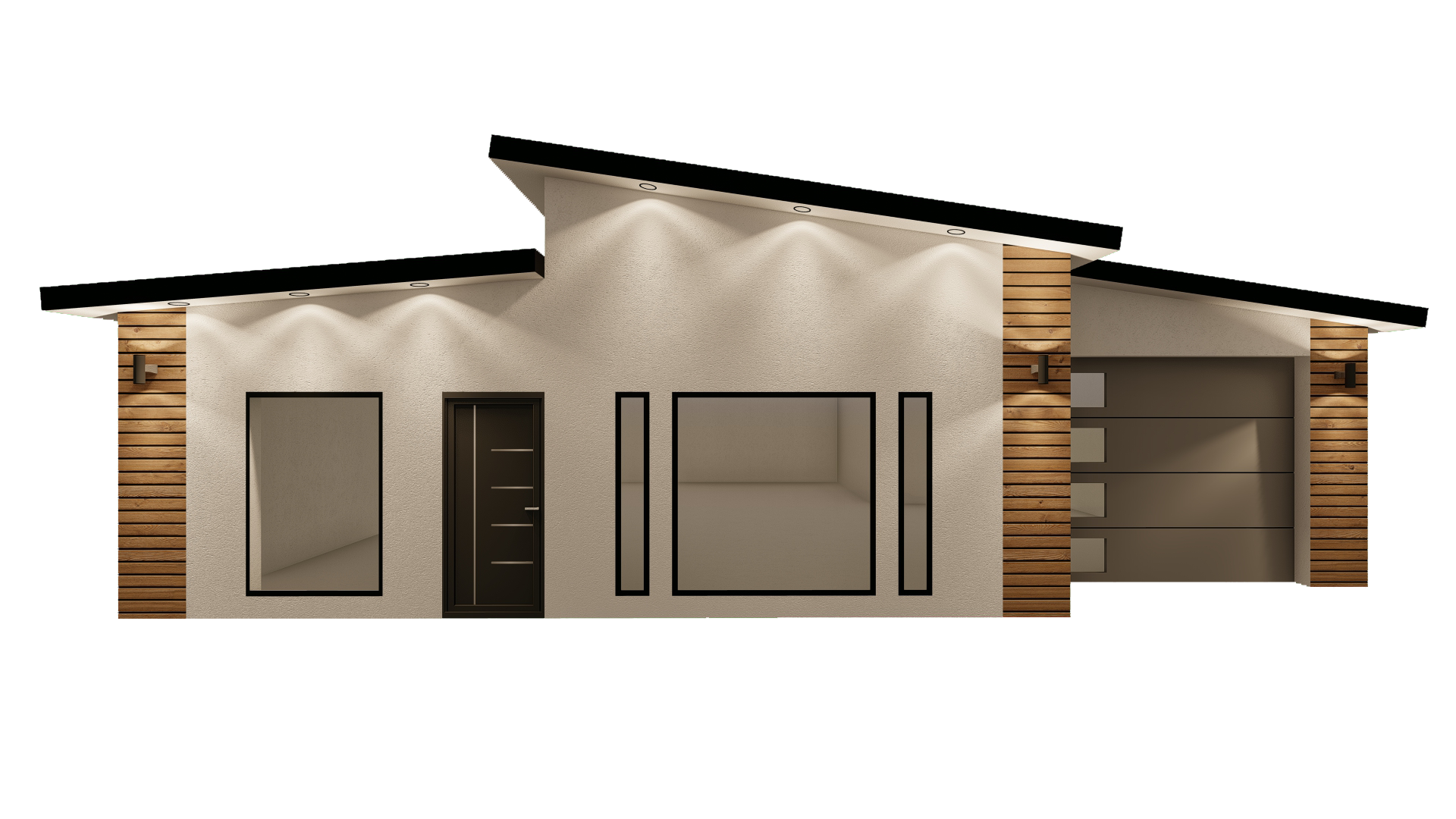
Coral homes feature a low-slope roof profile paired with reflective TPO roofing.
Traditional steep residential roofs create large attic volumes where heat accumulates during the day. In Texas, attic temperatures can often reach well over 150 degrees, forcing air conditioning systems to work harder to maintain comfortable indoor temperatures.
By reducing attic volume and using reflective roofing membranes, Coral homes limit the amount of heat entering the structure. TPO roofing reflects a significant portion of solar radiation rather than absorbing it like traditional asphalt shingles.
The result is a cooler roof surface, lower attic temperatures, and reduced cooling demand during the hottest months of the year.

Continuous Building Envelope
Another advantage of concrete construction is the reduction of seams and gaps in the building envelope.
Wood-framed houses contain many joints and material transitions where air leakage can occur. Over time, these gaps allow conditioned air to escape while outside air enters the home.
Concrete block construction forms a more continuous structural shell. When combined with modern sealing and insulation techniques, this improves air tightness and overall energy performance.
Storm Resilience and Structural Safety
Homes in East Texas must be designed with severe weather in mind. Reinforced concrete block construction provides a significant advantage when it comes to structural stability during high winds and storms.
Concrete masonry walls reinforced with steel rebar create a rigid structural shell that resists the uplift and lateral forces that can damage traditional wood-framed homes. This type of construction is commonly used in schools, commercial buildings, and municipal structures where durability is essential.
While no home can be completely immune to extreme weather events, reinforced masonry construction provides an additional level of structural resilience and peace of mind.
Acoustic Performance and Interior Comfort
Concrete construction also improves the acoustic performance of a home. Because concrete walls are denser than wood framing, they naturally reduce the amount of sound that passes through exterior walls.
This helps limit outside noise from traffic, weather, and neighboring properties while also creating quieter interior spaces.
The result is a home environment that feels calmer, more private, and more comfortable on a daily basis.
Durable Materials That Reduce Lifecycle Costs
Energy efficiency is only one part of the equation. Coral homes are also designed to reduce long-term maintenance and replacement costs.
Concrete walls resist rot, termites, and moisture damage. TPO roofing systems are designed for longevity and can often be repaired with localized patches rather than full roof replacement.
These material choices reduce the frequency of major repairs and extend the lifespan of key structural components, helping homeowners and investors protect the value of their property.